
YOU MATTER AND YOU’RE NOT ALONE
Breathe Through It
SUICIDE PREVENTION
Support should not begin at crisis.
We’re building a culture where conversations are open, support is accessible, and no one has to carry pain alone.
MY BREATH. MY POWER. MY LEGACY.
Breathe Through It is Legacies Empowered’s signature suicide prevention and mental wellness movement built to reach people where they already are.
Too many people are carrying more than they show.
Suicide doesn’t happen out of nowhere—it’s often the result of pain that goes unseen, unheard, or unsupported.
The truth is, there are signs. There are opportunities to step in. And when people are equipped with the right tools, lives can be saved.

HEALING STARTS WITH COMMUNITY
We are committed to making sure our communities know how to recognize those moments, respond with care, and connect people to support—before it’s too late.

Because healing, growth, and stability are possible when people have the right tools and community around them.
-
![Outline drawing of two people helping each other on a surfboard, set against a yellow circular background.]()
Mental Health Trainings
Equipping educators, caregivers, organizations, and community members with tools to recognize concerns, respond early, and support others.
-
![Illustration of six hands holding each other's wrists in a circle, with an orange circle background.]()
Resource Sharing
Connecting people to counseling, crisis resources, community support, and practical tools.
-
![Outline illustration of a soldering iron positioned diagonally in front of an orange circle.]()
Storytelling & Awareness
Breaking stigma through real voices, honest experiences, and hope-centered messaging.
-
![Outline of a heart with a group of people inside and behind it, symbolizing community or social support.]()
Community Events
Safe spaces where families, youth, and neighbors gather, learn, connect, and heal.
-
![Illustration of a school building with a clock, flag, and a large yellow sun in the background.]()
School Activations
Bringing age-appropriate suicide prevention and mental wellness conversations directly into schools.


IMMEDIATE SUPPORT
Need Support Right Now?
Don’t wait! If you or someone you know is struggling, please reach out now. You deserve support. You do not have to face this alone.
Call or Text 988 for immediate mental health crisis support.
WHY PREVENTION STARTS WITH US
Too often, mental health only becomes part of the conversation after something painful happens.
But true wellness is built before the breaking point.
Strong communities are built when we normalize mental wellness early, create safe conversations, and make support easier to access before someone reaches a breaking point.
Everyday people play a role in that.
A message of encouragement, the right training, a few volunteer hours, or a donation can create real impact for someone who needs hope today.
GET INVOLVED - BE PART OF SAVING LIVES
Prevention is a community effort. You don’t need to be a clinician to make a difference.
Take action today and help someone feel seen, supported, and valued.
-
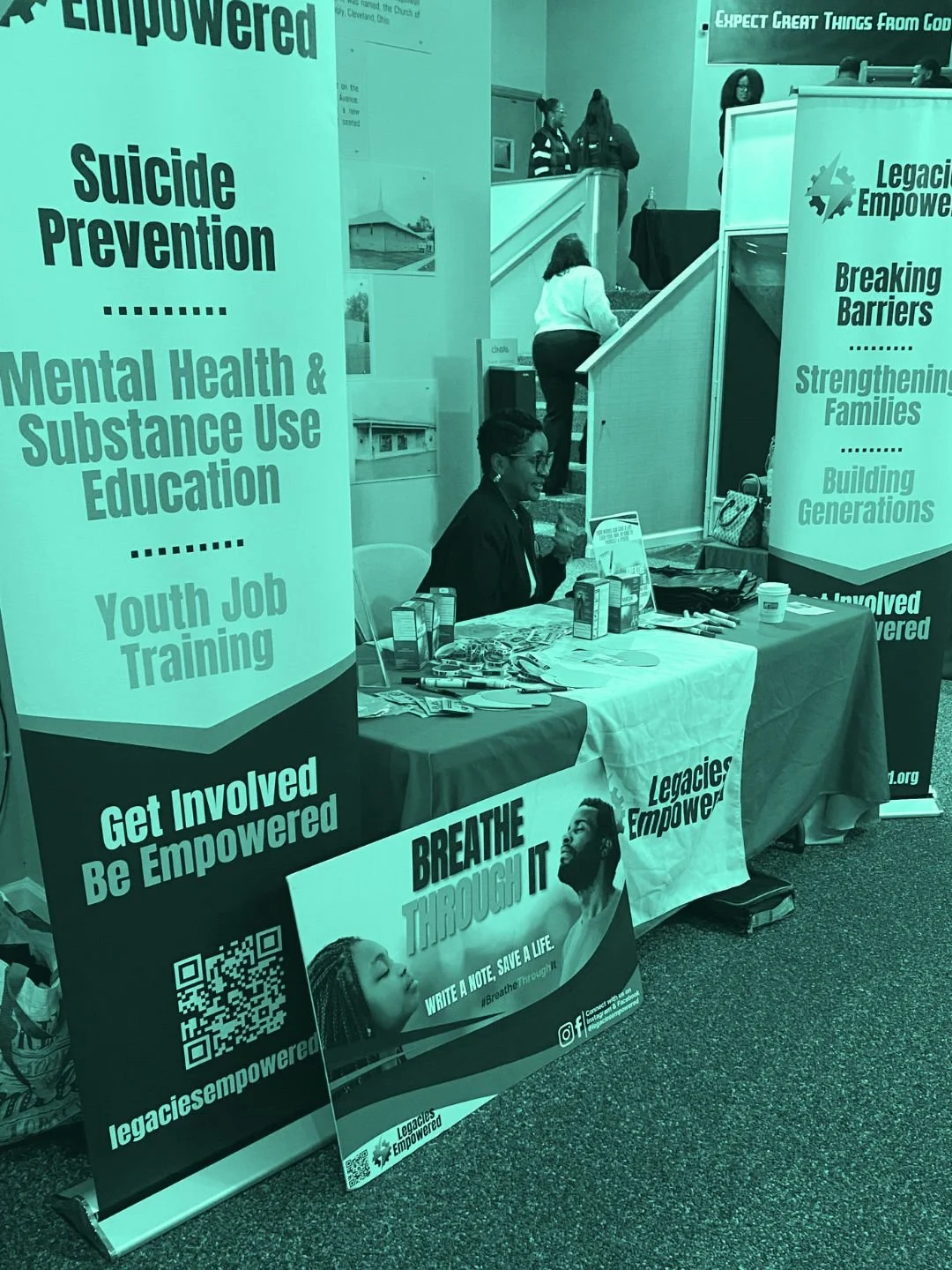
![An indoor event with informational booths on mental health and addiction prevention. A table is decorated with pamphlets and a banner reading 'Breath Through It,' featuring a woman with closed eyes. People are walking in the background.]()
Get Trained in QPR Suicide Prevention
QPR stands for Questions, Persuade, and Refer — a proven suicide prevention training that equips everyday people to respond when it matters most. Learn how to recognize warning signs, start important conversations, and connect someone to support.
-
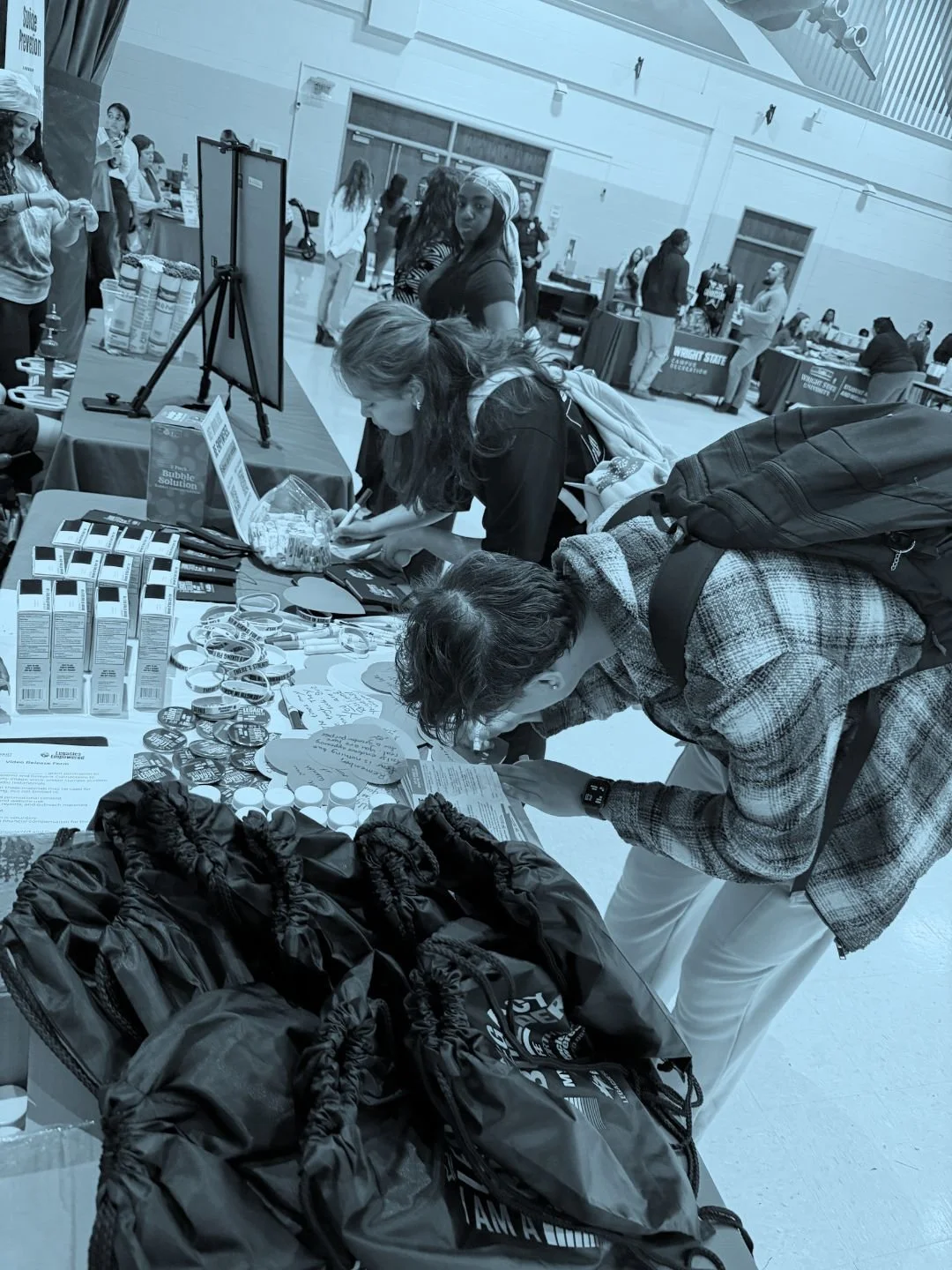
![A group of people at a conference or expo event, browsing booths with various promotional items, handouts, and informational materials.]()
Write A Note. Save A Life.
Words matter more than we realize. Submit an encouraging message, story, or reminder that someone is not alone. Your note may be shared to uplift someone who needs hope today.
-
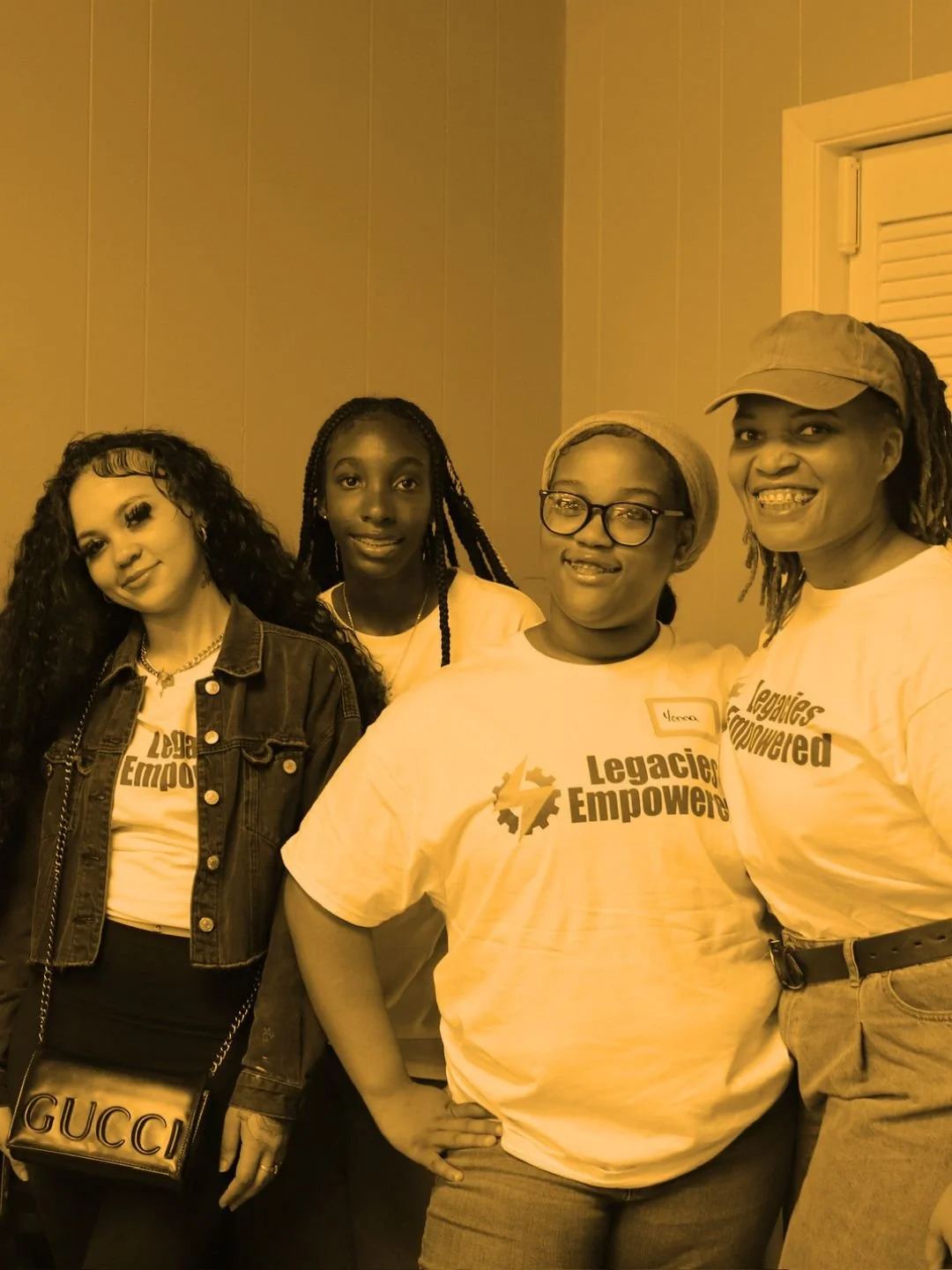
![Four women standing together indoors, wearing white 'Legacies Empowered' T-shirts, with one woman wearing glasses and a headscarf, other women with long hair, one in a black denim jacket, and posing happily.]()
Volunteer With Us
Join our mission to create safer, stronger communities. Volunteers support events, outreach, resource distribution, awareness campaigns, and community engagement. Whether you have one hour or ongoing availability, there is a place for you here.
HOPE LOOKS LIKE COMMUNITY
Watch how Legacies Empowered brings Breathe Through It into neighborhoods, schools, and community spaces—creating real connection, real support, and real impact.
Join us at an upcoming event and be part of the movement.
SUPPORT PREVENTION. STRENGTHEN COMMUNITIES. SAVE LIVES.
Donate to prevent crisis early.
Your gift supports life-saving education, outreach, trainings, and resources that reach people before they hit a breaking point.
Every contribution helps us show up earlier, stronger, and more often.
Stay plugged into the mission and the movement.
Get updates on community events, helpful resources, new videos, and ways to support the work happening through Legacies Empowered.
WHAT YOU SHOULD KNOW
Answers to common questions.
-
The behaviors listed below may be signs that someone is thinking about suicide:
Talking about wanting to die or wanting to kill themselves
Talking about feeling empty, hopeless, or having no reason to live
Making a plan or looking for a way to kill themselves, such as searching for lethal methods online, stockpiling pills, or buying a gun
Talking about great guilt or shame
Talking about feeling trapped or feeling that there are no solutions
Feeling unbearable pain (emotional pain or physical pain)
Talking about being a burden to others
Using alcohol or drugs more often
Acting anxious or agitated
Withdrawing from family and friends
Changing eating and/or sleeping habits
Showing rage or talking about seeking revenge
Taking great risks that could lead to death, such as driving extremely fast
Talking or thinking about death often
Displaying extreme mood swings, suddenly changing from very sad to very calm or happy
Giving away important possessions
Saying goodbye to friends and family
Putting affairs in order, making a will
If these warning signs apply to you or someone you know, get help as soon as possible, particularly if the behavior is new or has increased recently.
Help is available by calling or texting 988. Visit our Crisis Support Page for direct links. -
Suicide does not discriminate. People of all genders, ages, and ethnicities can be at risk.
Suicidal behavior is complex, and there is no single cause. Many different factors contribute to someone making a suicide attempt. But people most at risk tend to share specific characteristics.
The main risk factors for suicide are:
Depression, other mental disorders, or substance abuse disorder
Certain medical conditions
Chronic pain
A prior suicide attempt
Family history of a mental disorder or substance abuse
Family history of suicide
Family violence, including physical or sexual abuse
Having guns or other firearms in the home
Having recently been released from prison or jail
Being exposed to others' suicidal behavior, such as that of family members, peers, or celebrities
Many people have some of these risk factors but do not attempt suicide. It is important to note that suicide is not a normal response to stress.
Suicidal thoughts or actions are a sign of extreme distress, not a harmless bid for attention, and should not be ignored.
-
Here are five steps you can take to #BeThe1 to help someone in emotional pain:
Ask: “Are you thinking about killing yourself?”
It’s not an easy question, but studies show that asking at-risk individuals if they are suicidal does not increase suicides or suicidal thoughts.
Keep Them Safe: Reducing a suicidal person’s access to highly lethal items or places is an important part of suicide prevention.
While this is not always easy, asking if the at-risk person has a plan and removing or disabling the lethal means can make a difference.
Be There: Listen carefully and learn what the individual is thinking and feeling.
Research suggests acknowledging and talking about suicide may reduce rather than increase suicidal thoughts.
Help Them Connect: Save the National Suicide Prevention Lifeline number 988 and the Crisis Text Line’s number (741741) in your phone, so it’s there when you need it.
You can also help make a connection with a trusted individual like a family member, friend, spiritual advisor, or mental health professional.
Stay Connected: Staying in touch after a crisis or after being discharged from care can make a difference.
Studies have shown the number of suicide deaths goes down when someone follows up with the at-risk person.
-
Protective factors are characteristics that help to adapt to different levels of hardship.
Studies show protective factors act as a buffer against suicidal thoughts and attempts.
Here are some examples of protective factors:
Strong family support and relationships
Community and social support
Religious and spiritual engagement
Personal factors like positive self-esteem and emotional wellbeing
Factors like stable housing, income and employment
-
Take time to learn more or become certified.
We offer FREE suicide prevention training called Question, Persuade, and Refer (QPR), which teaches three simple steps that anyone can learn to help save a life from suicide.
Just as people trained in CPR and the Heimlich Maneuver help save thousands of lives each year, people trained in QPR learn how to recognize the warning signs of a suicide crisis and how to question, persuade, and refer someone to help.
Sign up for free QPR training
-
In 2023, there were 49,316 deaths by suicide, making it the 11th leading cause of death overall in the US.
Recent data reveals an alarming increase in suicide rates among Black and African American youth.
In 2023, the Centers for Disease Control and Prevention (CDC) reported that suicide rates among Black adolescents have continued to rise, with a 30% increase in suicide rates for Black children ages 10 to 14 from 2018 to 2023.
This troubling trend was further highlighted by a 2024 study published in the Journal of the American Medical Association, which found that Black adolescents are twice as likely to die by suicide compared to their white counterparts.
Additionally, the National Institute of Mental Health reports that, in 2024, suicide remains a leading cause of death for Black youth ages 10 to 19.
-
How we report on suicide matters.
Please read these ten tips on how you can more safely report on suicide.
Here are some additional recommendations for reporting.
-
Here are a few resources for parents:
We offer Youth Mental Health First Aid training for parents, caregivers and other adults who work with youth ages 12-18 to recognize and help young people facing mental health and/or substance use issues.
Resources for parents from The Kids Mental Health Foundation
-
Here is a list of verified suicide prevention resources: